
Essential Dog Health Monitoring for Every Owner: What I Wish I’d Known Earlier
I’ll never forget the morning I realized I’d been missing the signs for weeks. My dog Cambrie seemed a bit “off,” but I couldn’t put my finger on exactly what had changed. Was was gaining weight, but eating the same amount of food. She was also a bit lethargic. Was she just getting older or was this something to worry about? When the vet asked me specific questions about her symptoms, I found myself saying “I think…” and “maybe…” far too often.
That frustrating moment taught me an invaluable lesson: our dogs can’t tell us when something’s wrong, but their bodies give us clues every single day. The problem is, without a system to track these subtle changes, we miss the patterns until they become obvious problems.
Today, I’m sharing everything I’ve learned about monitoring your dog’s health—not in an overwhelming, clinical way, but through simple, practical daily observations that take just a few minutes.
Whether you’re a new dog parent or have years of experience, systematic health tracking can catch issues early, save money on emergency care, and give you confidence that you’re providing the best possible care for your furry family member.
Why Health Monitoring Actually Matters
Here’s a sobering statistic: veterinarians estimate that many health conditions could be managed more effectively and less expensively if caught earlier. But dogs are masters at hiding discomfort, an instinct inherited from their wild ancestors where showing weakness meant vulnerability.
By the time behavioral changes become obvious to us, the underlying issue may have been developing for weeks or even months. That subtle decrease in appetite? Could be the first sign of dental disease. Those slightly stiff mornings? Might indicate early arthritis that’s treatable with joint supplements and lifestyle modifications.
The financial impact is significant too. Preventive care and early intervention typically cost a fraction of emergency treatment. Regular monitoring helps you catch issues when they’re manageable, not when they’ve become critical situations requiring costly emergency vet visits.
But beyond the practical benefits, health monitoring is really about being your dog’s voice. They can’t tell you their stomach has been upset for three days, or that their leg hurts when they jump, or that they’ve been more tired than usual. Your observations become their words.
What to Track Daily (Without Losing Your Mind)

The key to sustainable health tracking is keeping it simple and consistent. You don’t need to become a veterinary technician—you just need to be observant about your own dog’s normal patterns.
Know Your Dog’s Vital Signs Baseline
Before anything else, establish what’s normal for YOUR dog. Every dog is slightly different, and knowing their baseline helps you recognize when something’s off.
Normal ranges for dogs:
- Temperature: 101-102.5°F
- Resting heart rate: 60-140 beats per minute (varies by size—smaller dogs have faster heart rates)
- Respiratory rate: 10-30 breaths per minute at rest
I recommend investing in a reliable digital pet thermometer and learning how to check these vitals when your dog is healthy and calm. These baseline measurements become invaluable reference points. Our Dog Health Tracker includes a section specifically for recording these baseline vitals, so you always have them handy for vet visits.
Daily Observable Changes
These are the things you can notice during your normal routine with your dog—no special equipment needed:
Appetite and eating patterns: Does your dog eat enthusiastically or hesitantly? Finish their meals or leave food behind? Any changes in how they chew or approach their bowl?
Water intake: Is your dog drinking their normal amount? Significantly more or less? This can be one of the earliest indicators of issues ranging from kidney problems to diabetes.
Bathroom habits: Regular schedule and consistency? Any straining, accidents, or changes in frequency? These patterns tell you so much about digestive and urinary health.
Energy levels: Does your dog have their usual enthusiasm for walks and play? Are they sleeping more or seeming restless? Energy changes can be subtle but significant.
Sleep quality: Is your dog resting comfortably, or are they frequently adjusting positions, panting, or seeming unable to settle?
With Cambrie, I noticed she was gaining weight over the course of a few months but because I wasn’t tracking it systematically, I kept dismissing it because we had not been exercising very much. Once I started actually weighing her, the increase was undeniable—and led to an early diagnosis of hyperthyroidism.
Behavioral Indicators of Health
Dogs communicate their comfort level through behavior, but these signals can be incredibly subtle:
Social interaction changes: Is your typically friendly dog becoming withdrawn? Or is your independent pup suddenly clingy? Both can indicate discomfort or anxiety.
Response to usual activities: That slight hesitation before jumping in the car, or less enthusiasm for fetch—these small changes matter.
Mood shifts: Increased irritability, anxiety, or unusual lethargy can all be pain indicators.
Pain signals: These range from obvious (limping, whining) to subtle (changed sleeping positions, reluctance to move after resting, avoiding stairs they used to bound up). I’ve learned that Cambrie seeking out cool tile floors is often her way of telling me she’s uncomfortable, long before she shows any other obvious signs.
Weekly Health Checks: Your 10-Minute Routine

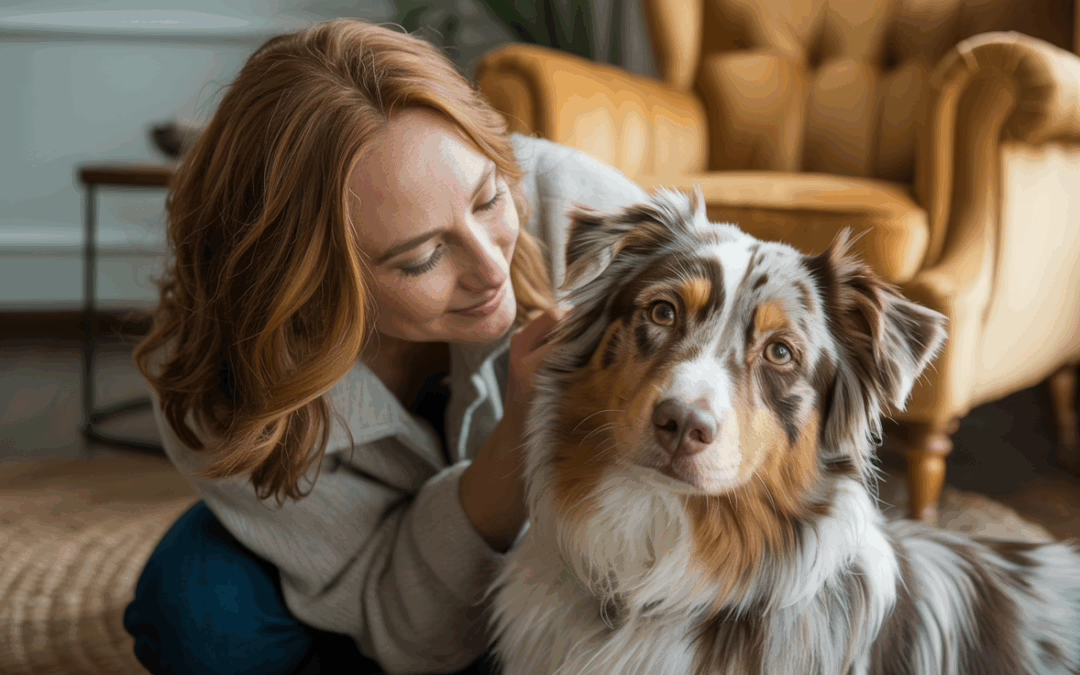
Every weekend, I spend about 10 minutes doing a thorough “hands-on” check with Cambrie. This has become our bonding time—she gets a gentle massage and attention, and I get peace of mind.
Here’s what I check:
Lumps and bumps: Running my hands over her entire body, feeling for any new growths or changes in existing ones. Monthly photos of any existing lumps help me track if they’re growing.
Ears: Look inside for redness, discharge, or odor. Many ear infections start subtly and are much easier to treat early.
Eyes: Check for clarity, discharge, or redness. Are they bright and alert?
Mouth and teeth: Look at gum color (should be pink, not pale or inflamed), check for broken teeth, and note any bad breath that might indicate dental issues.
Coat and skin: Part the fur to check the skin underneath. Look for dry patches, redness, flakes, or any parasites.
Paws: Examine paw pads for cracks, cuts, or foreign objects. Check between toes for mats or irritation. This is also a good time to assess whether nails need trimming.
I keep a simple weekly checklist, and if I notice anything concerning, I note it in our health tracker. This way, if I need to call the vet, I can say “I first noticed this on October 15th and it’s gotten progressively worse” rather than “sometime in the past few weeks, maybe?”
Monthly Deep Dives: Seeing the Big Picture
Once a month, I take a step back and look at patterns rather than individual days:
Weight tracking: I weigh Cambrie monthly and plot it on a simple chart. Gradual weight changes—up or down—can indicate various health issues before they become obvious. A 2-3 pound change might not seem like much to me, but on a 40-pound dog, that’s significant.
Pattern review: I look back through my daily notes to identify trends. Is she consistently stiff on cold mornings? Does she drink more water on days we go for longer walks? These patterns help me understand what’s normal variation versus genuine concern.
Exercise tolerance assessment: Can she handle the same activities as last month, or is she tiring more quickly? This gradual decline is easy to miss day-to-day but becomes clear when you look at the bigger picture.
Quality of life check: Is she still enjoying her favorite activities? Engaging with family? Showing her personality? Sometimes we get so focused on physical health that we forget to assess happiness and mental well-being.
The monthly review is where the power of tracking really shows itself. Individual data points might not mean much, but trends tell stories.
Preparing for Vet Visits: Finally, No More “I’m Not Sure”
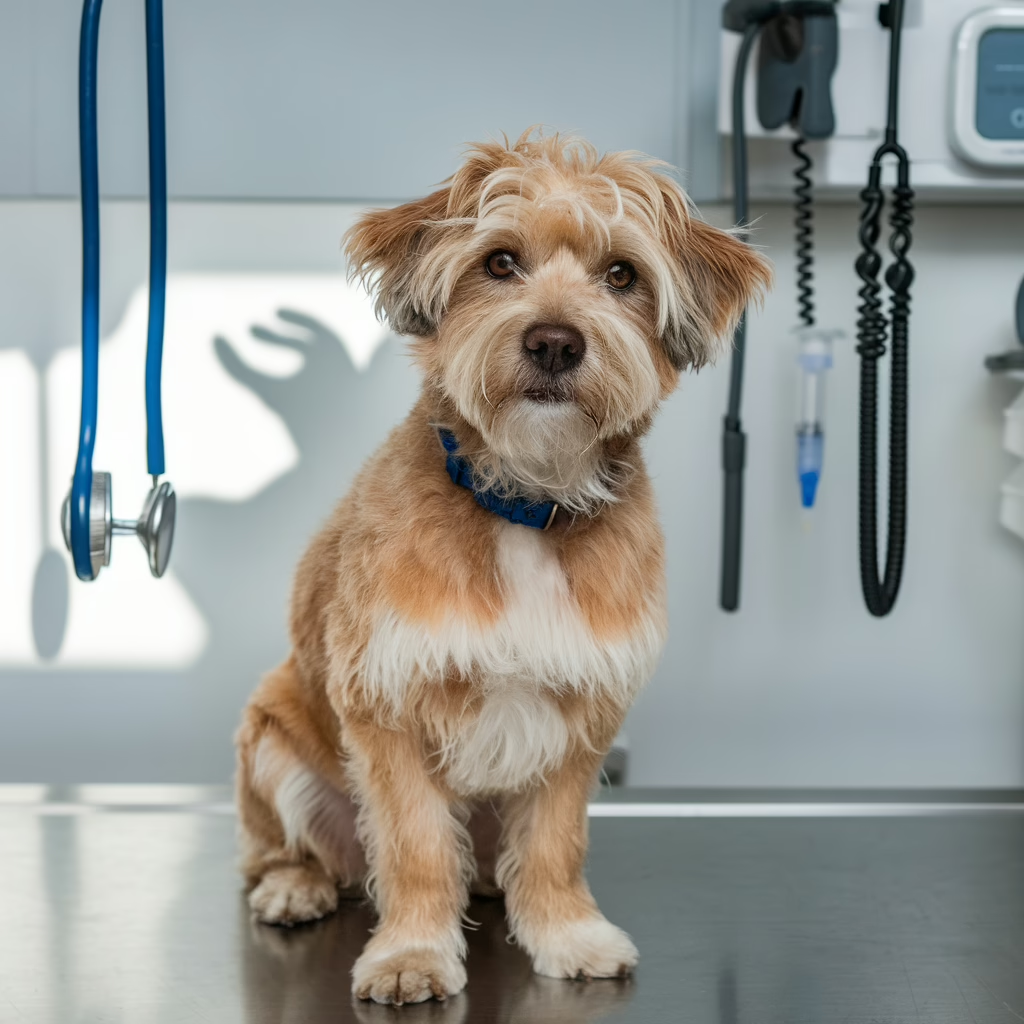
Remember my frustration at not being able to answer the vet’s questions about Cambrie? That was the catalyst for creating a better system.
Organized records transform vet visits from guesswork to collaboration:
Instead of “She seems to be less active,” you can say “Her activity has significantly slowed down.”
Rather than “I think she’s been limping for a while,” you can report “She started favoring her right front leg on October 8th, particularly after exercise and first thing in the morning.”
What vets actually need to know:
- When did symptoms start? (Specific dates, not vague timeframes)
- How have symptoms progressed? (Getting better, worse, or staying the same?)
- What makes symptoms better or worse? (Exercise, time of day, weather, food?)
- Any other changes during the same period? (Diet changes, new medications, environmental factors?)
- Previous similar episodes and how they were resolved
Our Dog Health Tracker includes a vet visit preparation worksheet that compiles all this information in the format veterinarians find most helpful. I fill it out before every appointment, and my vet has commented multiple times on how much more efficiently we can diagnose and treat issues because of the detailed information.
Questions to ask based on your tracking data:
Your logs might reveal questions you wouldn’t have thought to ask:
- “I’ve noticed her energy is lowest on cold, damp days. Could this indicate arthritis?”
- “Her bathroom schedule has shifted to more frequent, smaller amounts. Is this normal aging or something to investigate?”
- “She seems uncomfortable two hours after eating. Could this be related to her food?”
Having specific observations leads to specific answers and better care.
Common Tracking Mistakes (That I’ve Definitely Made)

Let me save you from the mistakes I made when I first started monitoring Cambrie’s health:
Inconsistency: I’d track diligently for a week, then forget for two weeks, then feel guilty and try to backtrack from memory (which doesn’t work). The solution? I set a phone reminder for the same time every evening. Just 2-3 minutes while I’m winding down for the day.
Crisis-only tracking: At first, I only wrote things down when something seemed wrong. But that meant I had no baseline to compare against! Now I track the good days too, so I actually know what “normal” looks like for Rainey.
Analysis paralysis: I initially tried to track EVERYTHING—every sip of water, every bathroom break, every mood fluctuation. It was exhausting and unsustainable. I’ve learned that tracking 5-7 key metrics consistently beats tracking 20 things sporadically.
Ignoring environmental factors: I noticed Cambrie seemed “off” but couldn’t figure out the pattern. Then I realized it correlated with my work schedule—the days I worked late and she got less exercise. Now I note major environmental factors (weather, schedule changes, visitors, travel) because they provide important context.
Perfectionism: I missed some days. Some weeks my notes were brief. Some logs were messy. And you know what? That’s okay! Imperfect tracking is infinitely better than no tracking. Progress over perfection, always.
Making Health Tracking Actually Sustainable
The best tracking system is the one you’ll actually use consistently. Here’s what works for me:
Start ridiculously simple. In your first week, just track three things: appetite, energy, and anything unusual. That’s it. Once that becomes automatic, add one or two more metrics.
Integrate it into existing routines. I check off my daily log right after Rainey’s evening meal—it’s already part of our routine, so I don’t have to remember a separate new habit.
Make it a family affair. Everyone in our household contributes observations. My partner notices different things than I do, and combining our perspectives gives a fuller picture. Our tracker has a shared notes section perfect for multiple people.
Set up your environment for success. I keep a printed tracking sheet on the refrigerator with a pen attached. Low friction = higher consistency. (Though I transfer notes to our digital Dog Health Tracker weekly for long-term records.)
Celebrate milestones. After my first month of consistent tracking, I treated myself to a fancy coffee. After three months, I upgraded Rainey’s bed. Making it rewarding helps maintain the habit.
Review and adjust monthly. If you’re tracking something that never changes or doesn’t provide useful information, drop it. If you keep wishing you had information you’re not capturing, add it. Your tracking system should evolve with your needs.
Real-Life Success Stories: Why This Actually Matters
Let me share some stories from fellow dog parents in our community about what systematic health tracking caught early:
Sarah’s Story – Early Diabetes Detection: Sarah noticed over three weeks that her golden retriever Molly was drinking increasingly more water. Because she was measuring and tracking, she had specific numbers: from 6 cups per day to 10 cups per day. Her vet ran blood work that revealed early-stage diabetes. With dietary changes and careful monitoring, Molly’s diabetes is well-controlled, and Sarah caught it before it became a crisis.
Michael’s Story – Identifying Arthritis: Michael tracked his 7-year-old Labrador’s mobility every day for two months. The individual days looked fine, but when he reviewed his notes, he noticed a clear pattern: Max was consistently slow to get up after rest, reluctant to use stairs on cold mornings, and his “warm-up period” on walks was getting longer. His vet confirmed early arthritis, and they started joint supplements and modified exercise before Max was in serious pain. Two years later, Max is still active and comfortable.
Jessica’s Story – Digestive Issues: Jessica’s beagle had occasional digestive upset that seemed random. By tracking not just the symptoms but also what they ate, exercise timing, and even the weather, Jessica discovered the pattern: digestive issues happened within 24 hours of eating a specific ingredient in treats. Eliminating that one ingredient solved months of intermittent problems.
The common thread? All three of these pet parents were tracking consistently when things seemed mostly fine. They didn’t wait for a crisis to start paying attention. Their systematic observations caught issues at the “this might be something” stage rather than the “this is definitely an emergency” stage.
Introducing the Dog Health Tracker & Symptom Log
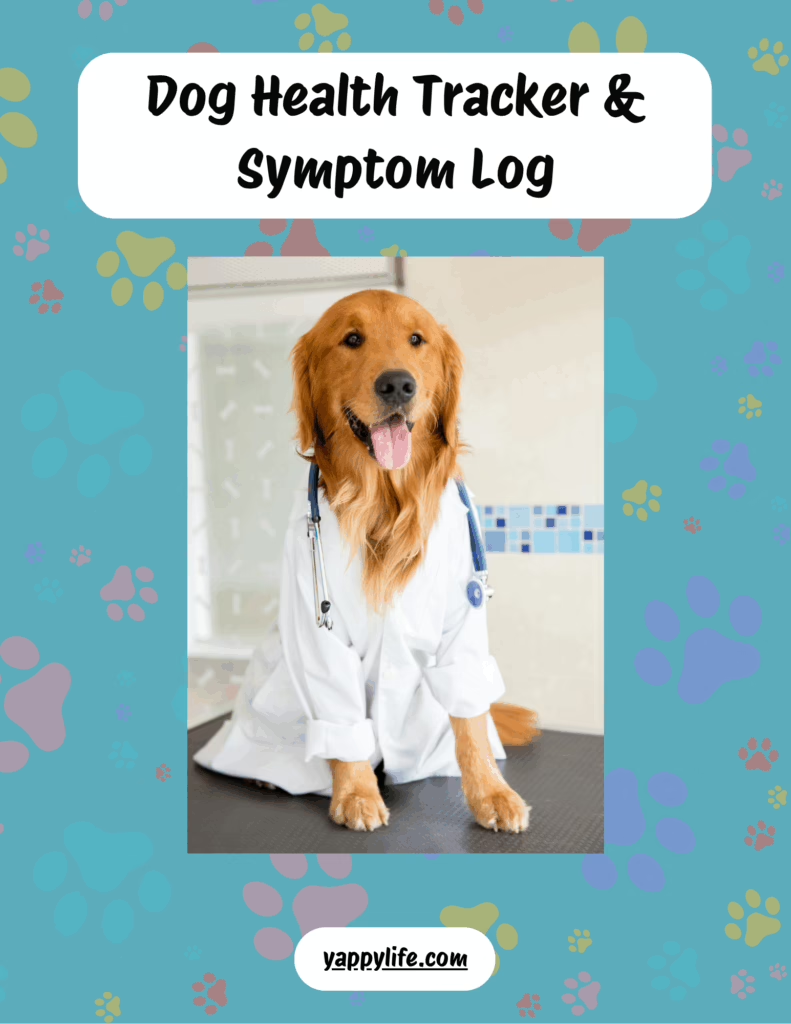
After years of trial and error with various tracking methods—from apps that were too complicated to paper systems that were too scattered—I created the resource I wish I’d had from the beginning: a comprehensive Dog Health Tracker & Symptom Log that’s practical, organized, and actually usable.
Here’s what’s included:
Daily Log Templates that take just 2-3 minutes to complete. Quick check-boxes for common observations, plus space for notes about anything unusual. No medical degree required—just observations about your own dog.
Baseline Vital Signs Record where you document your dog’s normal temperature, heart rate, and respiratory rate when they’re healthy. These become your reference points for recognizing when something’s off.
Weekly Health Check Lists that walk you through systematic physical examinations. Never wonder “what should I be checking?” again.
Weight Tracking Charts with visual graphs so you can spot trends at a glance. Sometimes a pattern isn’t obvious in numbers but jumps out when you see it plotted over time.
Medication & Supplement Tracker because keeping up with multiple medications, proper dosages, and refill dates can be overwhelming. Everything’s organized in one place.
Symptom Documentation Guides that help you capture the specific details vets need: when it started, how it’s progressing, what makes it better or worse, accompanying symptoms. No more “I’m not sure” during appointments.
Vet Visit Preparation Worksheets that compile your tracking data into the format veterinarians find most helpful. Walk into appointments confident and organized.
Monthly Pattern Review Pages where you step back from daily details to see the bigger picture. This is where subtle trends reveal themselves.
The tracker is designed to integrate seamlessly with your routine—not add stress to your life. Use what’s helpful, skip what’s not relevant for your situation, and customize it to fit your dog’s unique needs.
You can find the Dog Health Tracker & Symptom Log in our Etsy shop, where you’ll get instant access to downloadable PDF files you can print at home or fill out digitally. Many pet parents print several copies at once—one for home, one for their car, and one for the pet sitter.
Getting Started This Week: Your Action Plan

Ready to begin monitoring your dog’s health systematically? Here’s a realistic four-week startup plan that won’t overwhelm you:
Week 1: Establish Baselines
- Measure your dog’s weight and record it
- Take resting heart rate when they’re calm and relaxed
- Check temperature (if you have a pet thermometer)
- Note their current appearance: coat condition, energy level, normal behavior
- Take a “wellness photo” for your records
- Track just three things daily: appetite, energy level, and anything unusual
Week 2: Begin Daily Observations
- Continue your three core metrics from Week 1
- Add water intake awareness (you don’t need exact measurements yet—just note if it seems normal, higher, or lower)
- Add bathroom habit observations (timing and consistency)
- Do your first weekly physical check: run hands over body, check ears, look at teeth
- Start making brief notes—even just a few words per day
Week 3: First Weekly Review
- Look back at your two weeks of observations
- Notice any patterns or trends
- Do your second weekly physical check
- Add one or two more metrics if the first five feel automatic now
- Share your tracking with family members and get them involved
Week 4: Monthly Assessment
- Complete a comprehensive review of the month’s data
- Identify what “normal” looks like for your specific dog
- Celebrate your first month of tracking!
- Adjust your system: drop anything that’s not useful, add anything you wish you’d been capturing
- Weigh your dog again and compare to Week 1
After these four weeks, health tracking should feel like a natural part of your routine rather than an extra chore. The data you’ve collected gives you a solid baseline for recognizing future changes.
Your Dog’s Health Advocate

Here’s what I’ve learned after years of monitoring Cambrie’s health: this practice isn’t about being paranoid or anxious. It’s about being present and observant with the companion who depends on you completely.
Our dogs give us unconditional love, unwavering loyalty, and daily joy. Health monitoring is one way we give back—by being their voice when they can’t tell us something hurts, their memory when patterns develop too slowly to notice day-to-day, and their advocate when making care decisions.
Small daily observations create comprehensive health pictures. That 2-minute evening check-in isn’t just data collection—it’s an act of love. It’s saying “I’m paying attention. I’ve got you. I’ll notice if something changes.”
Your dog can’t tell you when something’s wrong, but with consistent tracking, you’ll notice the subtle shifts before they become obvious problems. You’ll walk into vet appointments confident and informed. You’ll catch treatable issues early. And you’ll have peace of mind knowing you’re truly doing everything possible to keep your furry family member healthy and happy.
The best time to start tracking your dog’s health was the day you brought them home. The second best time is today.
Ready to get organized about your dog’s health? Download our comprehensive Dog Health Tracker & Symptom Log from our Etsy shop and start building your baseline today. Your future self—and your dog—will thank you.
Want more dog care guidance? Check out our Senior Dog Comfort & Care Checklist for related health monitoring tips, and visit our Amazon shop for recommended health monitoring tools including digital thermometers, quality scales, and more.
For daily dog care tips and inspiration, follow us on Instagram, Facebook, and YouTube, where we share practical advice from our own journey with our furry family members.

 ]
]
Recent Comments